 Add to Chrome
 Add to Firefox
 Add to Edge
Share More, Search Less: Collaborative Parallel Thinking for Efficient Test-Time Scaling
May 26, 2026
Test-Time Scaling (TTS) enhances the reasoning capabilities of large language models by allocating additional inference compute to explore the solution space. However, existing parallel TTS methods typically keep branches isolated during search: intermediate discoveries remain branch-private and cannot guide other branches in time. This information isolation causes substantial redundant exploration, as branches repeatedly rediscover information already found elsewhere and require more search steps to collect complete decision information needed to reach correct answers. To bridge this gap, we propose \textbf{Collaborative Parallel Thinking (CPT)}, a training-free inference framework that enables search-time information sharing across parallel branches. CPT extracts compact intermediate information from ongoing branches, maintains a deduplicated query-level information pool, and broadcasts pool entries through the input context, allowing each branch in subsequent search steps to reuse discoveries made by other branches rather than rediscover the same information. Empirically, experiments on HMMT and AIME benchmarks show that CPT establishes a stronger accuracy--latency Pareto frontier than strong baselines across rollout budgets and model scales, highlighting search-time collaboration as an effective direction for efficient parallel TTS.

MUJICA: Multi-skill Unified Joint Integration of Control Architecture for Wheeled-Legged Robots
May 13, 2026Wheeled-legged robots hold promise for traversing complex terrains and offer superior mobility compared to legged robots. However, wheeled-legged robots must effectively balance both wheeled driving and legged control. Furthermore, due to noisy proprioceptive sensing and real-world motor constraints, realizing robust and adaptive locomotion at peak performance of motors remains challenging. We propose the Multi-skill Unified Joint Integration of Control Architecture (MUJICA), a unified, fully proprioceptive control framework for wheeled-legged robots that integrates diverse low-level skills-including omnidirectional moving, high platform climbing, and fall recovery-within a single policy. All skills, distinguished by unique indicator variables, are trained jointly with accurate DC-motor constraint modeling. Additionally, a high-level skill selector is learned to dynamically choose the optimal skill based solely on proprioceptions, enabling adaptive responses to the surrounding environment. Therefore, MUJICA enhances sim-to-real robustness and enables seamless transitions across diverse locomotion modes, facilitating autonomous adjustment to the environment. We validate our framework in both simulation and real-world experiments on the Unitree Go2-W robot, demonstrating significant improvements in adaptability and task success in unstructured environments.
On Time, Within Budget: Constraint-Driven Online Resource Allocation for Agentic Workflows
May 07, 2026Agentic systems increasingly solve complex user requests by executing orchestrated workflows, where subtasks are assigned to specialized models or tools and coordinated according to their dependencies. While recent work improves agent efficiency by optimizing the performance--cost--latency frontier, real deployments often impose concrete requirements: a workflow must be completed within a specified budget and before a specified deadline. This shifts the goal from average efficiency optimization to maximizing the probability that the entire workflow completes successfully under explicit budget and deadline constraints. We study \emph{constraint-driven online resource allocation for agentic workflows}. Given a dependency-structured workflow and estimates of success rates and generation lengths for each subtask--model pair, the executor allocates models and parallel samples across simultaneously executable subtasks while managing the remaining budget and time. We formulate this setting as a finite-horizon stochastic online allocation problem and propose \emph{Monte Carlo Portfolio Planning} (MCPP), a lightweight closed-loop planner that directly estimates constrained completion probability through simulated workflow executions and replans after observed outcomes. Experiments on CodeFlow and ProofFlow demonstrate that MCPP consistently improves constrained completion probability over strong baselines across a wide range of budget--deadline constraints.
KiRAS: Keyframe Guided Self-Imitation for Robust and Adaptive Skill Learning in Quadruped Robots
Mar 16, 2026With advances in reinforcement learning and imitation learning, quadruped robots can acquire diverse skills within a single policy by imitating multiple skill-specific datasets. However, the lack of datasets on complex terrains limits the ability of such multi-skill policies to generalize effectively in unstructured environments. Inspired by animation, we adopt keyframes as minimal and universal skill representations, relaxing dataset constraints and enabling the integration of terrain adaptability with skill diversity. We propose Keyframe Guided Self-Imitation for Robust and Adaptive Skill Learning (KiRAS), an end-to-end framework for acquiring and transitioning between diverse skill primitives on complex terrains. KiRAS first learns diverse skills on flat terrain through keyframe-guided self-imitation, eliminating the need for expert datasets; then continues training the same policy network on rough terrains to enhance robustness. To eliminate catastrophic forgetting, a proficiency-based Skill Initialization Technique is introduced. Experiments on Solo-8 and Unitree Go1 robots show that KiRAS enables robust skill acquisition and smooth transitions across challenging terrains. This framework demonstrates its potential as a lightweight platform for multi-skill generation and dataset collection. It further enables flexible skill transitions that enhance locomotion on challenging terrains.
Learning More from Less: Unlocking Internal Representations for Benchmark Compression
Feb 03, 2026The prohibitive cost of evaluating Large Language Models (LLMs) necessitates efficient alternatives to full-scale benchmarking. Prevalent approaches address this by identifying a small coreset of items to approximate full-benchmark performance. However, existing methods must estimate a reliable item profile from response patterns across many source models, which becomes statistically unstable when the source pool is small. This dependency is particularly limiting for newly released benchmarks with minimal historical evaluation data. We argue that discrete correctness labels are a lossy view of the model's decision process and fail to capture information encoded in hidden states. To address this, we introduce REPCORE, which aligns heterogeneous hidden states into a unified latent space to construct representative coresets. Using these subsets for performance extrapolation, REPCORE achieves precise estimation accuracy with as few as ten source models. Experiments on five benchmarks and over 200 models show consistent gains over output-based baselines in ranking correlation and estimation accuracy. Spectral analysis further indicates that the aligned representations contain separable components reflecting broad response tendencies and task-specific reasoning patterns.
Do Not Waste Your Rollouts: Recycling Search Experience for Efficient Test-Time Scaling
Jan 29, 2026Test-Time Scaling enhances the reasoning capabilities of Large Language Models by allocating additional inference compute to broaden the exploration of the solution space. However, existing search strategies typically treat rollouts as disposable samples, where valuable intermediate insights are effectively discarded after each trial. This systemic memorylessness leads to massive computational redundancy, as models repeatedly re-derive discovered conclusions and revisit known dead ends across extensive attempts. To bridge this gap, we propose \textbf{Recycling Search Experience (RSE)}, a self-guided, training-free strategy that turns test-time search from a series of isolated trials into a cumulative process. By actively distilling raw trajectories into a shared experience bank, RSE enables positive recycling of intermediate conclusions to shortcut redundant derivations and negative recycling of failure patterns to prune encountered dead ends. Theoretically, we provide an analysis that formalizes the efficiency gains of RSE, validating its advantage over independent sampling in solving complex reasoning tasks. Empirically, extensive experiments on HMMT24, HMMT25, IMO-Bench, and HLE show that RSE consistently outperforms strong baselines with comparable computational cost, achieving state-of-the-art scaling efficiency.
A Scheduling Framework for Efficient MoE Inference on Edge GPU-NDP Systems
Jan 07, 2026Mixture-of-Experts (MoE) models facilitate edge deployment by decoupling model capacity from active computation, yet their large memory footprint drives the need for GPU systems with near-data processing (NDP) capabilities that offload experts to dedicated processing units. However, deploying MoE models on such edge-based GPU-NDP systems faces three critical challenges: 1) severe load imbalance across NDP units due to non-uniform expert selection and expert parallelism, 2) insufficient GPU utilization during expert computation within NDP units, and 3) extensive data pre-profiling necessitated by unpredictable expert activation patterns for pre-fetching. To address these challenges, this paper proposes an efficient inference framework featuring three key optimizations. First, the underexplored tensor parallelism in MoE inference is exploited to partition and compute large expert parameters across multiple NDP units simultaneously towards edge low-batch scenarios. Second, a load-balancing-aware scheduling algorithm distributes expert computations across NDP units and GPU to maximize resource utilization. Third, a dataset-free pre-fetching strategy proactively loads frequently accessed experts to minimize activation delays. Experimental results show that our framework enables GPU-NDP systems to achieve 2.41x on average and up to 2.56x speedup in end-to-end latency compared to state-of-the-art approaches, significantly enhancing MoE inference efficiency in resource-constrained environments.
RENet: Fault-Tolerant Motion Control for Quadruped Robots via Redundant Estimator Networks under Visual Collapse
Sep 11, 2025Vision-based locomotion in outdoor environments presents significant challenges for quadruped robots. Accurate environmental prediction and effective handling of depth sensor noise during real-world deployment remain difficult, severely restricting the outdoor applications of such algorithms. To address these deployment challenges in vision-based motion control, this letter proposes the Redundant Estimator Network (RENet) framework. The framework employs a dual-estimator architecture that ensures robust motion performance while maintaining deployment stability during onboard vision failures. Through an online estimator adaptation, our method enables seamless transitions between estimation modules when handling visual perception uncertainties. Experimental validation on a real-world robot demonstrates the framework's effectiveness in complex outdoor environments, showing particular advantages in scenarios with degraded visual perception. This framework demonstrates its potential as a practical solution for reliable robotic deployment in challenging field conditions. Project website: https://RENet-Loco.github.io/
* Accepted for IEEE Robotics and Automation Letters (RA-L)
Mind the Quote: Enabling Quotation-Aware Dialogue in LLMs via Plug-and-Play Modules
May 30, 2025Human-AI conversation frequently relies on quoting earlier text-"check it with the formula I just highlighted"-yet today's large language models (LLMs) lack an explicit mechanism for locating and exploiting such spans. We formalise the challenge as span-conditioned generation, decomposing each turn into the dialogue history, a set of token-offset quotation spans, and an intent utterance. Building on this abstraction, we introduce a quotation-centric data pipeline that automatically synthesises task-specific dialogues, verifies answer correctness through multi-stage consistency checks, and yields both a heterogeneous training corpus and the first benchmark covering five representative scenarios. To meet the benchmark's zero-overhead and parameter-efficiency requirements, we propose QuAda, a lightweight training-based method that attaches two bottleneck projections to every attention head, dynamically amplifying or suppressing attention to quoted spans at inference time while leaving the prompt unchanged and updating < 2.8% of backbone weights. Experiments across models show that QuAda is suitable for all scenarios and generalises to unseen topics, offering an effective, plug-and-play solution for quotation-aware dialogue.
Does Machine Unlearning Truly Remove Model Knowledge? A Framework for Auditing Unlearning in LLMs
May 29, 2025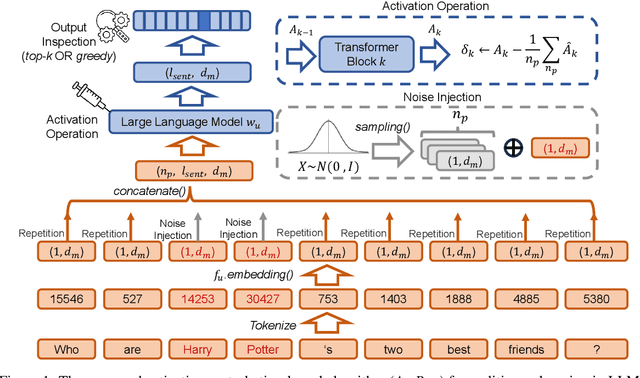
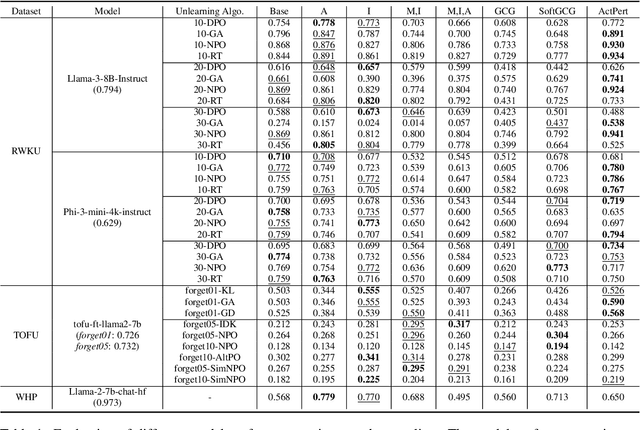
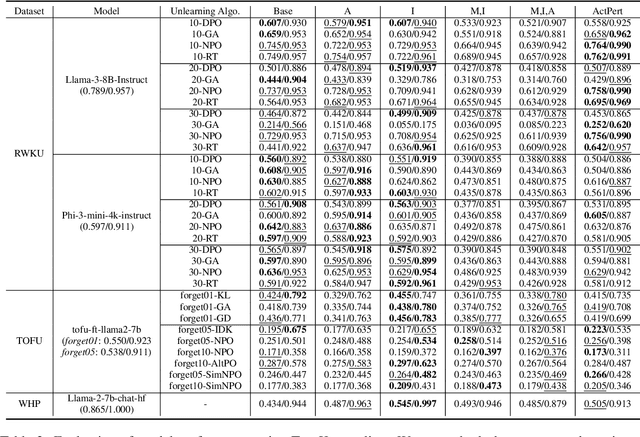
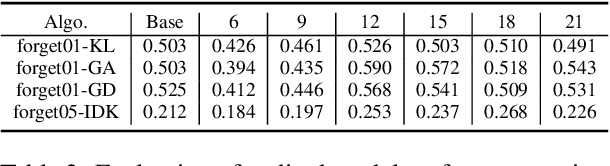
In recent years, Large Language Models (LLMs) have achieved remarkable advancements, drawing significant attention from the research community. Their capabilities are largely attributed to large-scale architectures, which require extensive training on massive datasets. However, such datasets often contain sensitive or copyrighted content sourced from the public internet, raising concerns about data privacy and ownership. Regulatory frameworks, such as the General Data Protection Regulation (GDPR), grant individuals the right to request the removal of such sensitive information. This has motivated the development of machine unlearning algorithms that aim to remove specific knowledge from models without the need for costly retraining. Despite these advancements, evaluating the efficacy of unlearning algorithms remains a challenge due to the inherent complexity and generative nature of LLMs. In this work, we introduce a comprehensive auditing framework for unlearning evaluation, comprising three benchmark datasets, six unlearning algorithms, and five prompt-based auditing methods. By using various auditing algorithms, we evaluate the effectiveness and robustness of different unlearning strategies. To explore alternatives beyond prompt-based auditing, we propose a novel technique that leverages intermediate activation perturbations, addressing the limitations of auditing methods that rely solely on model inputs and outputs.